
The cheapest cross-chain swap is often not the one with the lowest quoted fee. A route that appears to save a few dollars can expose a trader to more contracts, more approvals, more price movement, and more opportunities for a transaction to fail. For DeFi users in the United States, where network fees, taxable disposals, and operational mistakes all matter, the real optimization problem is broader: how can you move value across chains while minimizing total cost and avoidable risk?
Cross-chain swaps sit at the intersection of two different systems. One determines how assets move between networks; the other determines how a wallet authorizes those actions. Understanding that distinction is more useful than memorizing a list of “best” routes. A bridge may transport an asset, while a decentralized exchange converts it. An aggregator may combine several venues, but it does not remove the underlying smart-contract or settlement risks. A wallet such as Rabby can make the transaction flow easier to inspect, but it cannot turn an unsafe protocol or careless approval into a safe one.
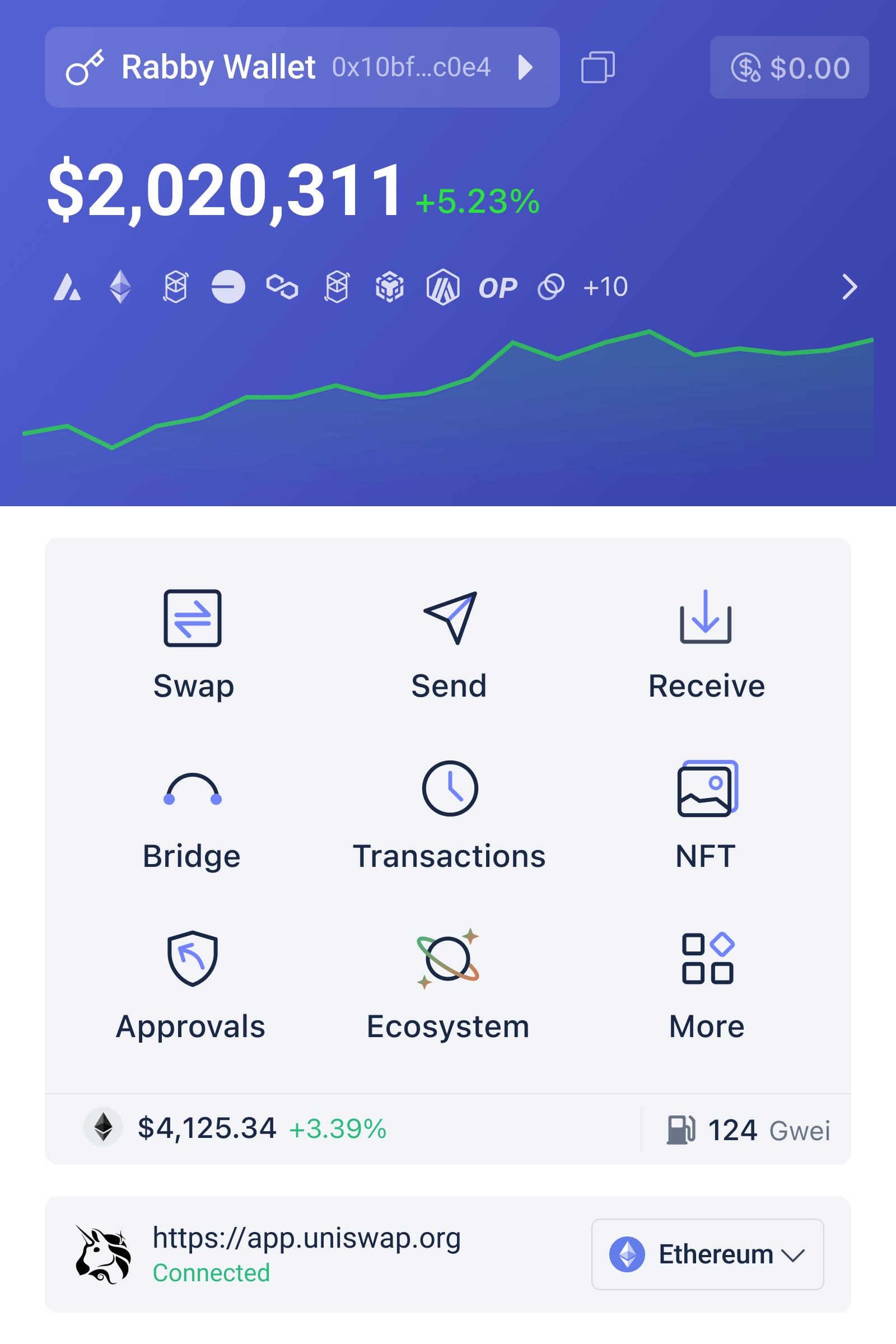
Two Routes, Two Risk Profiles
There are two broad ways to approach a cross-chain swap. The first is a bridge-first route: move an asset from the source chain to the destination chain, then trade it there. The second is a swap-and-settle route, often presented by a cross-chain aggregator: the user selects a source token and destination token, while the underlying system coordinates liquidity, messaging, or settlement across networks.
A bridge-first route is conceptually transparent. You can inspect the bridge transaction, wait for the asset to arrive, and then use a familiar decentralized exchange on the destination network. That separation can help with troubleshooting. If something goes wrong, the likely failure is easier to classify: the bridge transfer, the destination swap, or the wallet’s network configuration. The disadvantage is friction. You may need two transactions, two gas balances, and exposure to an intermediate asset whose price or liquidity is not ideal.
A combined cross-chain route is usually more convenient. It may reduce the number of steps and can sometimes find liquidity that is not obvious from a single chain. But convenience hides complexity. A route can involve a bridge, a solver, a liquidity provider, a destination-chain swap, and several contract calls. Each additional component can introduce a separate failure mode: an expired quote, insufficient destination gas, slippage, token support problems, or a contract that behaves differently than expected.
The important comparison is therefore not “bridge versus aggregator” in the abstract. It is visible complexity versus hidden complexity. A bridge-first strategy exposes more manual work but may make the transaction easier to reason about. A combined route reduces clicks but asks the user to trust a larger execution path. Neither is universally superior. A small, routine transfer may justify convenience; a large transfer may justify a slower route with fewer unknowns and a test transaction first.
What a Wallet Can and Cannot Protect
Installing a wallet browser extension is not the same as securing a DeFi strategy. A wallet is the signing boundary: it displays transaction requests and asks the user to approve them. The blockchain then enforces whatever was signed. This means the most valuable wallet feature is not merely a polished interface. It is the ability to help the user understand what a transaction is attempting to do before authorization.
For readers preparing a new browser profile or replacing a wallet, use the official installation path and verify the extension source before entering any recovery phrase. A legitimate wallet will not require a secret recovery phrase to be pasted into a website, chat window, or support form. Users who want to review the setup process can begin with this rabby extension download resource, then independently confirm the extension’s permissions, network settings, and account address before funding it.
Transaction simulation and readable warnings can be useful because many dangerous actions look ordinary at the wallet level. A signature may authorize token spending without immediately transferring funds. A contract interaction may approve a larger allowance than the current trade needs. A destination address may be correct in one chain context but irrelevant in another. These are not problems a wallet can always solve automatically, but clear previews can create a pause between intent and authorization.
That pause is a security control. Before confirming a cross-chain swap, check the source chain, destination chain, token symbols and contract addresses, expected recipient, minimum received amount, allowance request, and the gas asset required after arrival. If the route requires a destination-chain transaction but sends you there with no native gas token, the transfer may succeed while the funds remain temporarily unusable. “Successful” and “ready to use” are not always the same state.
Gas Optimization Is a Total-Cost Problem
Gas is the fee paid to block producers or validators for processing computation and storage. The visible gas number, however, is only one part of a cross-chain trade’s cost. A more realistic model is:
Total cost = source gas + destination gas + bridge or routing fee + price impact + slippage risk + expected failure cost.
The final term is easy to ignore because it is not displayed as a line item. A failed transaction can still consume gas. A stale quote can produce materially worse execution. A mistaken approval can create a larger security problem than the original fee. This is why choosing the lowest nominal gas estimate can be irrational if it substantially increases complexity or execution uncertainty.
There are several practical ways to reduce unnecessary cost. First, compare routes at the same time and for the same amount, because liquidity and quotes change. Second, avoid splitting a small transaction across many steps unless the expected price improvement clearly exceeds the extra fees. Third, keep a modest amount of the destination chain’s native gas token available before beginning a complex transfer, rather than discovering the requirement after settlement. Fourth, consider timing: network congestion can make the same transaction materially more expensive at different moments, although waiting introduces its own price risk.
Gas limits deserve careful treatment. A gas limit is the maximum computation a transaction is allowed to consume, not a promise that the full amount will be spent. Setting it too low can cause failure; setting it unnecessarily high does not always mean the entire limit is charged, but it can make a transaction look alarming and may interact with wallet or protocol interfaces in confusing ways. Users should be cautious about manually changing advanced gas fields unless they understand the network’s fee model and the transaction’s computational needs.
Layer-2 networks can offer lower transaction costs than a heavily used base chain, but “cheaper” does not mean “free” or “safer.” Bridges between an Ethereum-compatible layer-2 and another network may still require waiting periods, destination gas, or reliance on an external messaging system. Liquidity can also be thinner. A lower gas bill may be offset by price impact if the available pool cannot absorb the trade efficiently.
Security Trade-Offs in Cross-Chain Execution
Cross-chain systems expand the attack surface because they coordinate states that do not naturally share one ledger. The bridge or settlement mechanism must establish that an event happened on one network and should be honored on another. Different designs use different assumptions, including validator sets, external messages, liquidity providers, or cryptographic verification. The user does not need to master every architecture, but should understand the general boundary: moving an asset across chains usually adds a trust or technical dependency beyond the source and destination exchanges.
Wrapped assets illustrate the distinction. A token representing an asset from another network may be economically useful, yet its value depends on the mechanism that supports redemption or settlement. It is not identical to the native asset merely because the ticker looks familiar. Before swapping, inspect whether the received token is native, canonical for that network, or a representation issued by another system. Similar names are a poor substitute for contract verification.
Approvals create another important boundary. A decentralized exchange or router may ask permission to spend a token. Unlimited approvals reduce future clicks but leave a broader authorization in place. Limited approvals add friction and may require more gas, yet they reduce the amount exposed if the approved contract is later compromised or used incorrectly. For infrequent or high-value activity, a limited allowance can be a reasonable part of risk management. Revoking approvals later may itself cost gas, so the decision should account for both security and operational expense.
Hardware signing can reduce the chance that malware silently authorizes a transaction, but it does not make a malicious transaction harmless. A hardware device can faithfully sign the wrong request if the user approves it. Likewise, a simulation can be informative without being a guarantee: contracts can change state, market conditions can move, and some interactions are difficult to model perfectly. The best defense is layered verification rather than faith in one warning screen.
A Reusable Decision Framework
For a small transfer, start with the simplest credible route. Confirm that the destination token has real liquidity, that the route leaves enough native gas for follow-up actions, and that the expected savings are larger than the fees and price impact. For a larger transfer, compare a bridge-first route with a combined route, examine the number of contracts involved, and consider sending a small test amount first. A test does not prove that every later transaction will succeed, but it can expose incorrect network selection, unsupported assets, or an unusable destination balance.
Before signing, ask five questions: What exactly leaves my wallet? What exactly should arrive? Which contract receives permission? Which chain pays each fee? What happens if the quote expires or the transfer is delayed? If the interface cannot answer these questions clearly, that is a reason to pause, not a reason to click through quickly.
Keep records of the transaction hashes, route, token received, and associated fees. For US users, cross-chain activity can create tax-reporting questions because swapping one digital asset for another may be treated differently from simply moving an asset between accounts. Tax treatment is fact-specific and can change with circumstances, so transaction records are more useful than relying on memory or a wallet label.
What to Watch as Cross-Chain Tools Mature
The most meaningful improvement would not necessarily be one-click execution. It would be better disclosure of route complexity, trust assumptions, allowance scope, destination readiness, and failure recovery. If interfaces make these elements comparable, users may be able to optimize for risk-adjusted cost rather than headline gas alone. That would also make competition healthier: protocols would have an incentive to reduce hidden failure modes, not merely advertise a lower fee.
For now, the cautious expectation is conditional. If liquidity becomes deeper and cross-chain messaging more reliable, combined routes could reduce routine friction. If complexity grows faster than interfaces improve, convenience may conceal more risk than it removes. The signal worth watching is not just lower fees. Look for clearer settlement status, better recovery paths, narrower approvals, and explanations that let a user verify intent without being a protocol engineer.
Frequently Asked Questions
Is a cross-chain swap the same as using a bridge?
No. A bridge generally moves an asset or message between networks, while a cross-chain swap also involves exchanging one asset for another. Some services combine both functions in one interface, but the underlying steps may still include bridging, liquidity settlement, and a destination-chain trade.
What is the safest way to reduce gas costs?
Compare the full route rather than chasing the lowest displayed fee. Use a credible network with sufficient liquidity, avoid unnecessary transaction steps, check congestion, keep destination gas available, and test unfamiliar routes with a small amount. Never reduce security checks merely to save a modest fee.
Can a wallet guarantee that a cross-chain swap is safe?
No. A wallet can help display transaction details, flag some risks, and enforce the user’s signing decision, but it cannot eliminate malicious contracts, bridge design risks, market movement, or user error. Safety depends on the protocol, the route, the assets, and the verification discipline applied before signing.
The sharper mental model is simple: a cross-chain swap is not one transaction with one fee. It is a chain of dependencies. Gas optimization matters, but only after the route is understandable, the asset is correctly identified, and the authorization is proportionate to the task. In DeFi, the cheapest path is useful only when it remains a path you can explain, verify, and recover from.